

Protecting Deal Value in Mergers and Acquisitions
10/12/2026
Contracts allocate financial liability, but they cannot govern human behavior or execution hurdles once integration starts. Embedding an On-Demand B2B Ombuds across the M&A lifecycle catches operational issues early, resolves personal friction before it festers, and protects the true value of the deal.

Protecting Startup Portfolios with a B2B Ombuds
10/11/2026
The relationship between venture capital investors and startup founders rests on shared ambition, but it operates under structural tension. A venture firm balances fund performance, milestone gates, and responsibilities to limited partners, while founders carry the day-to-day pressure of product development, commercialization, talent retention, and defending their vision.

Protecting Cross-Sector Alliances with a B2B Ombuds
10/10/2026
Public/private/nonprofit partnerships can be complicated. When unforeseen operational hurdles arise, cultural mismatch creates friction. Standard governance tools, such as rigid contracts, formal steering committees, and legal notices, are too clumsy for early intervention within tripartite partnerships.

10 Essential Qualities of a Great Ombuds
10/7/2026
An ombuds does more than de-escalate individual friction; they serve as an early warning radar that safeguards psychological safety, strengthens governance, and humanizes institutions. Happy Ombuds Day!

Will Your Deal Have Executive Blind Spots?
Contracts allocate legal liability, but they cannot govern external human dynamics. Integrating an independent, confidential safe harbor like an On-Demand B2B Ombuds into external business relationships addresses executive blind spots, protecting enterprise value long before friction escalates to the board or the press.
Why Vendors Need an On-Demand B2B Ombuds
9/28/2026
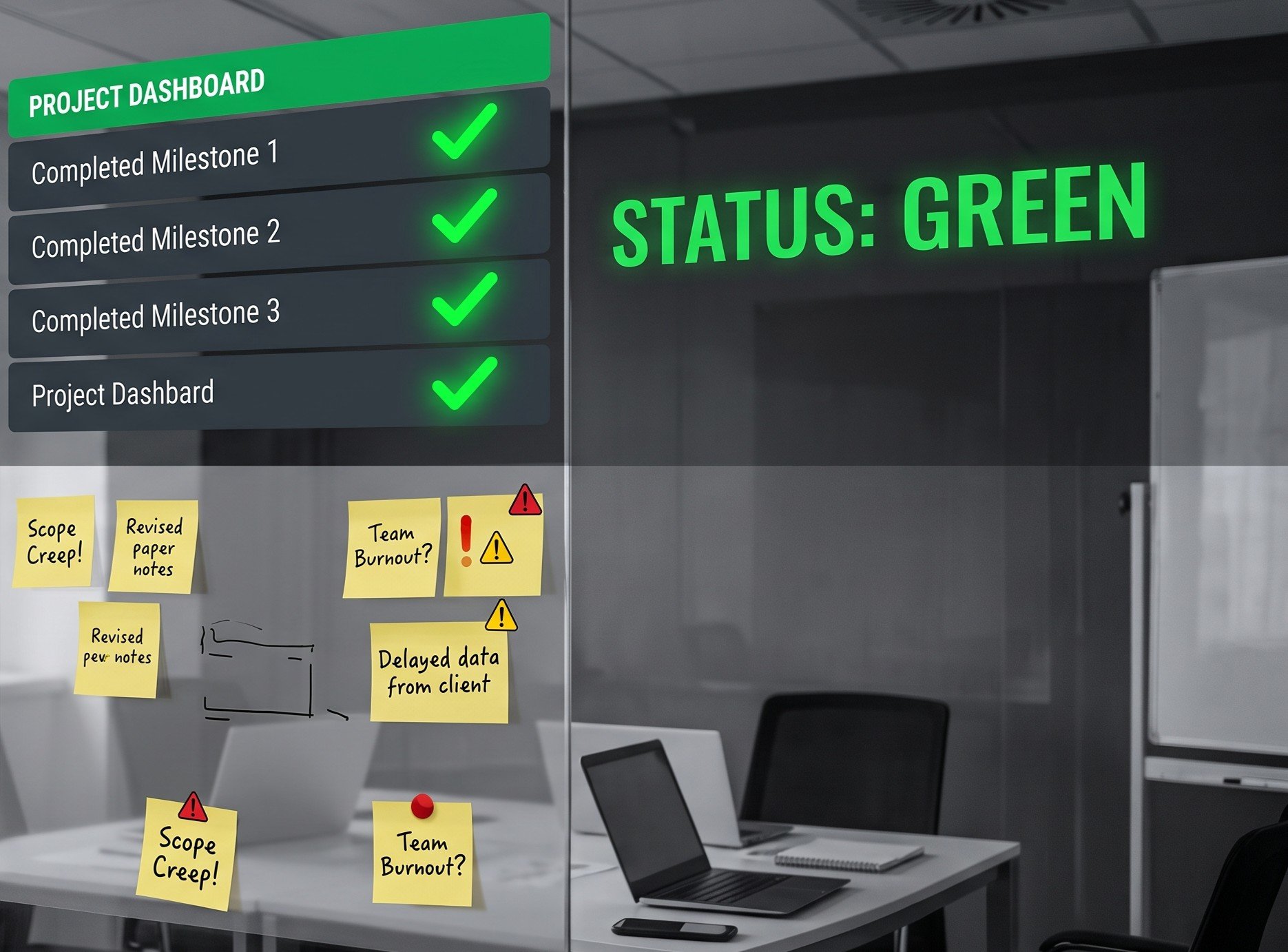
Status reports often glow green when delivery realities have already shifted to yellow, leaving frontline teams and subcontractors to silently absorb the strain. With an On-Demand B2B Ombuds, partners gain the psychological safety needed to address emerging friction before it threatens contract margins or commercial goodwill.

Five Collapses in B2B Value and How to Prevent Them
9/25/2026
Examining five corporate-to-corporate conflicts reveals how unchecked operational friction metastasizes into catastrophic value destruction, and how an independent, confidential B2B safe harbor could have intervened upstream.

Managing B2B Partnership Friction
9/23/2026
Recognizing early warning signs within specific partnership structures allows organizations to intervene before misunderstandings harden into formal legal disputes.

A Standby Neutral or an On-Demand B2B Ombuds? It Depends.
9/21/2026
Deciding between a Standby Neutral and an On-Demand B2B Ombuds ultimately hinges on whether your procurement governance strategy is designed to evaluate an existing dispute or give partners the psychological safety to prevent one.

The Math of Early Action
9/17/2026
In quality management and systems engineering, the 1-10-100 rule serves as a stark economic warning: catching a defect at the design stage costs $1; catching it during inspection costs $10; fixing it after a catastrophic failure in the field costs $100. An On-demand B2B Ombuds operates squarely at the $1 stage.

Navigating AI Disruption and Career Transitions
9/16/2026
An employee who plans their trajectory with clarity can transition gracefully, either moving into a redefined internal role or exiting on their own terms. Employers that facilitate these constructive outcomes earn a reputation as responsible leaders, reduce operational friction, and maintain trust across teams that remain.

An On-Demand Ombuds for Nonprofit Collaborations
9/13/2026
Cross-sector collaborations fail when the perceived risk of raising an early concern feels higher than the cost of enduring the friction. Writing an On-Demand B2B Ombuds into your partnership agreements provides the safety valve needed to protect the relationship before conflict threatens the mission.

Close the Dispute Gap with an On-Demand B2B Ombuds
9/12/2026
Commercial contracts need governance mechanisms that acknowledge human conflicts before they morph into legal claims. An On-Demand B2B Ombuds gives business partners the psychological safety needed to preserve valuable relationships.
The PACIFIC Methodology for Workplace Emotional Intelligence
9/8/2026
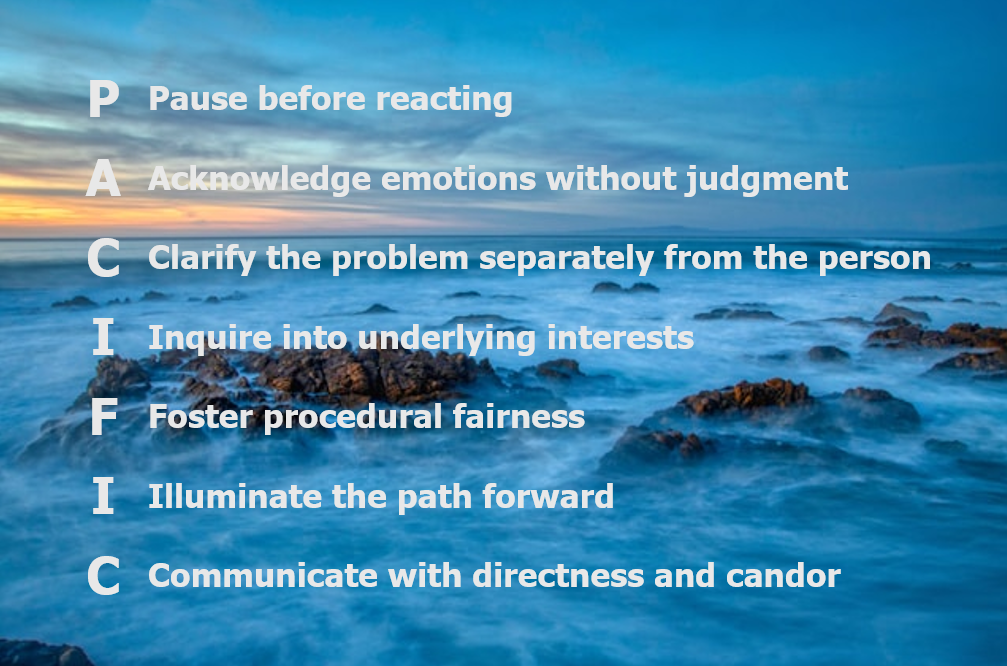
The PACIFIC framework provides a practical, seven-step sequence designed to de-escalate friction, protect relationships, and resolve disputes at their earliest stages.

When AI Anxiety Turns into Workplace Sabotage
9/4/2026
Technological transformation succeeds only at the speed of human trust. Investing in a neutral, confidential ombuds ensures that innovation elevates your culture and operations rather than destabilizing them from within.

Navigating the Node Network
9/2/2026
The transition to an AI-driven enterprise does not eliminate the human element; it elevates the consequence of every human decision within the network. Outsourced ombuds services ensure that as your technical infrastructure scales with autonomous efficiency, your human workforce retains the clarity, psychological safety, and conflict resolution support required for long-term sustainable growth.

Public Police Ombuds vs. Internal Police Ombuds
8/31/2026
While public ombuds ensure external accountability and community faith in the badge, law enforcement personnel work in exceptionally high-stress environments where internal friction can directly impact morale, officer wellness, and retention. Sworn officers and civilian employees need a trusted, independent space to explore workplace options.

The Knocker, the Door Opener, the Solution
8/26/2026
Reaching our 50th blog post at ADRx3 offers a timely moment to reflect on organizational architecture. When facing a closed door, progress requires two distinct actions: someone must knock to signal that something needs attention, and the door must be opened to allow constructive dialogue to begin.

Wellness Synergy in Law Enforcement
8/21/2026
True officer wellness requires supporting both the individual and the internal health of the organization. By pairing a dedicated internal ombuds with wellness center initiatives, agencies resolve workplace friction early and build a healthier, more resilient workforce.
Protecting the Frontline at the VA
8/18/2026
An organizational ombuds does not replace Patient Advocates, HR, or ADR Coordinators. Instead, an ombuds protects the space in between. By providing staff with a confidential, independent resource to explore options, leadership gains an early warning system that catches friction early and keeps clinical teams focused on veteran care.